
Checking Criminal History in Ithaca
Ithaca record checks begin with a routing question: did the city or the Gratiot County Sheriff create the police report? The answer may turn on when the event occurred and which agency responded. After that, the search separates the narrative, booking, court case, and state repository record. No office holds all four.
Use the incident date, location, agency or badge, report number, case number, and date of birth when known. Follow these steps:
- Review any citation, card, property receipt, or notice for the responding agency and incident number.
- Ask Ithaca City Hall whether it holds the record or whether the request belongs with the Gratiot County Sheriff.
- Search 65B District Court through MiCOURT and the live docket for the first criminal filing.
- Use the county jail roster and 24-hour line for custody, and check the circuit court after a felony bindover.
- Use ICHAT only for the public reportable Michigan history, then verify the result against the local case.
Ithaca Police Service Transition
Ithaca’s Winter 2026 city newsletter describes a police-service change and a continuing partnership with the Gratiot County Sheriff.

The newsletter matters to record access because a sheriff-created report belongs in the county request system, while a legacy report created and retained by Ithaca may still belong with the city.
An Ithaca incident date and responding agency now do more than narrow a search. They determine which public body should receive the Ithaca request. Sending a sheriff-created report request to the city can cause delay, while sending a legacy Ithaca file request to the county may produce no responsive record. Use any agency name, badge, report prefix, dispatch note, or court complaint to identify the creator before filing.
Note: Current Ithaca police routing should be confirmed with City Hall because the 2026 service arrangement affects record custody.
Ithaca Police Department Records
The label “Ithaca police record” describes the event location, not always the current custodian. The Ithaca government page provides the city’s police-service and FOIA routing. City Hall is at 129 W. Emerson Street, Ithaca, MI 48847, with a main phone of 989-875-3200 and fax of 989-875-4064. The city clerk or designee serves as FOIA coordinator.
A call to City Hall can determine whether Ithaca retains the report or whether the Gratiot County Sheriff created it. For a county-held report, use the county FOIA path or Sheriff Administration. For an Ithaca-held record, submit a written request to the city clerk. Name the incident, date, location, agency, and report number when possible.
The Ithaca city government source reflects the current Ithaca routing point.

That official page should be checked before choosing between the Ithaca and Gratiot County request systems.
Ithaca City or County FOIA
The city’s Ithaca FOIA procedures identify the city clerk or designee as coordinator.

Those procedures govern city-held records. Gratiot County FOIA is a parallel channel for records held by the county, with requests sent to the county coordinator at 214 E. Center Street or foia@gratiotmi.com. Neither channel can disclose a record the other body created and retained.
A useful Ithaca request asks for an existing item such as an incident report, supplemental narrative, or releasable attachment. It gives an approximate date and time, location, responding unit, and report number. It also states whether inspection or a copy is wanted. A broad request for “all criminal history” may cross police, jail, court, and state systems and is less likely to identify a single Ithaca-held record.
Ithaca Arrests and Bookings
Ithaca arrests move into the Gratiot County jail system at 226 E. Center Street. The jail booking can show admission, holding charges, bond, and release or transfer information that is public. It does not replace the incident narrative and does not prove guilt. The responding agency keeps the police report, while the jail keeps the booking.
Use the county-linked JailTracker roster for current listings and call 989-875-5211 for time-sensitive confirmation. A booking-sheet copy belongs with Sheriff Administration or county FOIA. Gratiot does not publish an official recent-arrest gallery. The sheriff’s annual reports give aggregate arrest and jail activity, but a personal Ithaca search must use the roster, jail phone, agency record, and court docket.
Unknown Agency in Ithaca Records
When the Ithaca responding agency is unknown, work backward from the documents that often survive the event. A citation may show the agency and badge. A bond receipt can point to the jail. A court complaint may name the investigating officer. A dispatch record can identify the unit sent to the call. Give Ithaca City Hall the event date, place, and type of call and ask for routing, not a legal interpretation.
If Ithaca has no responsive file, contact the Gratiot Sheriff. If Michigan State Police handled the matter, use MSP’s own records channel rather than Ithaca or county FOIA. For 911 audio or a CAD chronology, Gratiot County Central Dispatch maintains a separate request process. These distinctions matter because each Ithaca custodian can only search the records it holds.
Municipal Court Records in Ithaca
Being the county seat does not give Ithaca a standalone municipal criminal court portal. The 65B District Court serves Ithaca and the rest of Gratiot County. It handles misdemeanors through sentence and the arraignment and preliminary stages of felonies. A bound-over felony continues in the 29th Circuit Court.
The following table shows what an Ithaca case search should target:
| Court Name | 65B District Court; 29th Circuit Court after a felony bindover |
|---|---|
| Case Types Heard | Misdemeanors and felony beginnings in district; bound-over felony cases in circuit |
| Case Lookup Channel | MiCOURT, 65B live docket, courthouse terminal, or clerk request |
| What the Docket Shows | Filed charges, events, hearings, status, disposition, sentence, and public financial entries |
| Copies & Fees | The proper clerk supplies pleadings and certified dispositions; exact current criminal-copy fees were not located |
Ithaca 65B Live Court Docket
The 65B live docket is especially practical from the Ithaca county seat, but it is only a schedule. It refreshes every 30 minutes, groups entries by date, and lists defendant names alphabetically with the scheduled time and room. A room label of “Hearing” means an informal hearing before a magistrate. Nonpublic Ithaca cases do not appear.
For a broader Ithaca case record, use MiCOURT Case Search. Search 65B first and then select the Gratiot circuit court if a felony was bound over. The courthouse public terminal may provide public register-of-actions details not exposed remotely. Copies of a complaint, order, or certified disposition still come from the clerk.
An Ithaca calendar entry should never be read as the outcome. It does not show the whole file, and a scheduled hearing can change. Confirm date and location from the Ithaca court notice or clerk when attendance matters.
Where Ithaca Records Go
An Ithaca event can begin with a sheriff or legacy city report, move to a county jail booking, and enter the same county’s court system. The prosecutor decides what complaint to authorize. The court then records hearings, pleas, orders, disposition, and sentence. Reportable fingerprint-supported events and matched outcomes can flow to the Michigan State Police repository.
Record flow: Ithaca police service or Gratiot County Sheriff › Gratiot County Courts › Michigan State Police Criminal Justice Information Center
The best Ithaca source depends on stage. A recent Ithaca event may appear first with the responding agency or jail. A filed case belongs with 65B. A bound-over felony belongs with the 29th Circuit. ICHAT is a later public repository view and excludes warrants, local misdemeanors, traffic records, juvenile matters, and suppressed information.
Ithaca Downtown Records Custodians
Ithaca City Hall, the Gratiot County Courthouse, and the Sheriff’s Office and jail sit within a few downtown blocks. That compact setting is helpful for routing, but proximity does not create one shared record. City Hall handles city-held administrative and legacy police material. The courthouse holds district and circuit case records. The sheriff and jail hold county reports, bookings, and custody facts.
The county courthouse is at 214 E. Center Street, and the Sheriff’s Office and 70-bed jail are next door at 226 E. Center Street. The 29th Circuit Court can be reached at 989-875-5224, while 65B District Court uses 989-875-5240. Those contacts serve different Ithaca criminal records. District handles misdemeanors and felony beginnings. Circuit handles a felony after bindover. The jail line answers custody questions around the clock, while court access follows clerk procedures and public hours.
The official Census comparison provides local population context for Ithaca, Alma, and St. Louis.
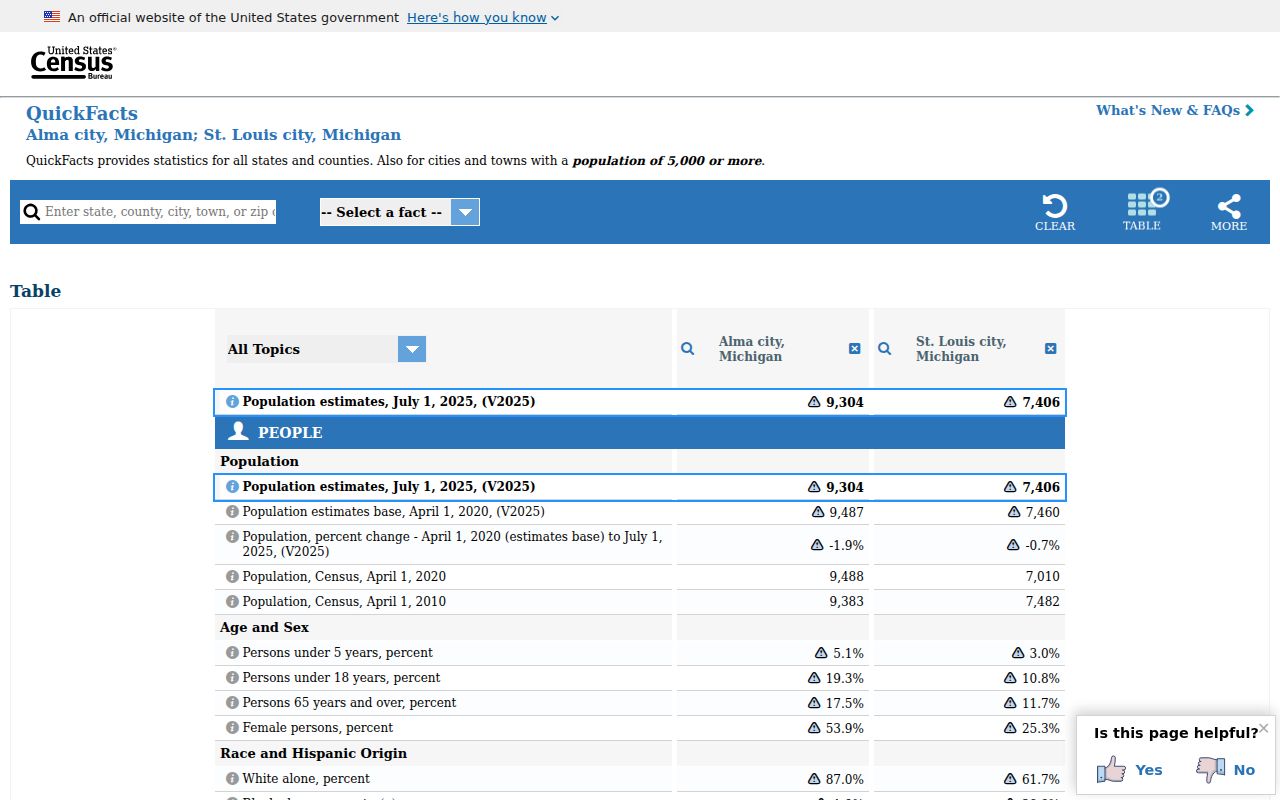
The city comparison gives local context, while Ithaca’s county-seat role explains why so many separate custodians are close together.
Call before an Ithaca counter trip. Ithaca City Hall publishes seasonal hours and maintains an after-hours drop box, but a drop box does not guarantee immediate records review. The circuit court publishes weekday public hours, and jail information operates around the clock. Match the Ithaca visit to the office and record needed.
Public Access Rules in Ithaca
Ithaca-held police and administrative records fall under the Michigan Freedom of Information Act. Gratiot sheriff records use county FOIA. Judicial files use Michigan Court Rule 8.119 and clerk procedures, not the city’s FOIA form. Public Michigan criminal-history data follows separate dissemination law through ICHAT.
Access is not the same as unrestricted release. Active investigative material, juvenile information, victim-sensitive facts, private data, and security-related details may be withheld or redacted when law allows. A public terminal is also subject to reasonable court controls. Ask the custodian to cite the authority for a denial and consider narrowing an Ithaca request to the exact releasable record needed.
Key Statutes:
MCL 15.231 states Michigan's policy of access to nonexempt public records.
MCL 15.233 governs inspection, copying, written requests, and public-body responses.
MCL 28.242a controls public dissemination of Michigan criminal-history information.
Older Ithaca Police Records
A report that predates the 2026 service transition should not automatically be sent to the current responding agency. Record custody follows who created and retained the file. Begin with Ithaca City Hall and provide the incident date, place, event type, and any report number. Ask whether the city holds the legacy record or transferred responsibility for that category.
Ithaca’s city clerk or designee is the local FOIA coordinator. The city publishes seasonal City Hall hours and maintains an after-hours drop box, which can help deliver a written request when the counter is closed. The drop box is a delivery method, not an on-demand records service. Keep a copy of the request and note when it was submitted. If the request concerns a sheriff response, route it to county FOIA instead of assuming City Hall will forward it.
If the city directs the request to the sheriff, use the county process and preserve the city’s routing response. If neither office locates it, check the court docket for an agency or officer reference and consider whether MSP or another agency handled the event. A lack of one police narrative does not erase a court case, booking, or state record held by a separate custodian.
For full county-wide context, the Gratiot County criminal history overview explains how the local jail, courts, ICHAT, and OTIS answer different questions.